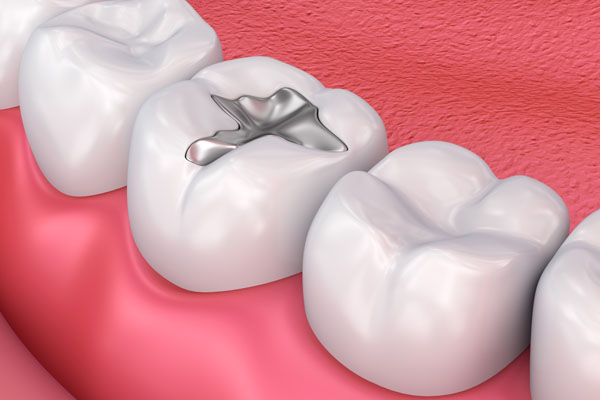
Dental restorations are for patients with missing, weakened, fractured, or decayed teeth. A restoration replaces or repairs missing teeth or parts of the tooth's structure. If a tooth shows signs of decay or may cause trouble later, dentists can strengthen the tooth to avoid future issues. When it comes to dental restoration, two common types include fillings and crowns.
What is the difference between fillings and crowns?
The significant differences between fillings and crowns are that fillings are essentially a material bonded to a person's teeth, whereas crowns are a prosthetic cemented to an individual's teeth.
Fillings basics
When teeth have holes in the enamel or suffer breaks or decay, dental fillings can fill the gap. Dentists can use fillings to repair a patient's teeth as long as the decay does not affect the inner pulp. For teeth with worn-out enamel or erosion, fillings restore the original shape and strength.
Dentists can use a variety of materials to fill teeth. White or composite fillings, for example, are plastic resin and powdered glass. These fillings are similar in color to the original tooth and can release small amounts of fluoride to prevent tooth decay. Another common material is a silver amalgam or silver fillings. Dentists use a silver alloy and mercury mixture for a durable filling.
Crowns basics
Crowns are a cap dentists place over a tooth to restore its strength, shape, and size. Dentists use crowns as dental restorations to protect the structural integrity of an individual's tooth. The materials used to make crowns include porcelain, ceramic, resin, or metal.
When a tooth requires a crown, the dentist files down the top and sides to make room for the space. How much the dentist shaves depends on the type of crown. For instance, metal dental crowns do not require a lot of shaving, whereas porcelain crowns require more. In some cases, when a tooth has too much decay or damage, the dentist may use a filling material to build up the tooth's structure before applying the crown.
Fillings vs. crowns
When given the option between dental restorations, most dentists will advise on their preferred method for each patient's respective issues. Fillings are typically the number one choice when the tooth has a small area of decay. Compared to crowns, filling are for minor repairs.
On the other hand, a crown helps when a patient's tooth has a large area of decay. Fillings cannot always protect a tooth from further damage after a certain point. Cracked teeth do not heal, so a crown can hold the tooth together and protect it from further damage. When a tooth has extensive damage, fillings can act as a wedge and pressure the teeth. Dentists can also use crowns to cover misshapen or discolored teeth.
Conclusion
For patients with cracked, decayed, or weakened teeth, dental restorations are a solution to restore a tooth's function and prevent further damage. Fillings are helpful when the patient's tooth still has strength, whereas crowns extend a weaker tooth's life.
Request an appointment or call Better Smiles at 602-466-9906 for an appointment in our Phoenix office.
Related Posts
There are many options available for dental restorations, and it is important to be informed about the procedures and treatment plans involved before committing to one. Typically, a patient will have a consultation with a dental professional prior to having any work done. This type of appointment is an ideal time to ask questions and…
Dental restorations can improve overall health by decreasing the chances of infection, decay, and issues caused by broken or misaligned teeth. These treatments range from removing teeth, replacing tooth structures that have decayed, and correcting the patient’s overall bite to improving eating and drinking.A restoration may be performed for cosmetic or health-related reasons, but even…
Restorative dentistry refers to any type of dental procedure that a dentist performs to restore a damaged or missing tooth. Dental restorations can encompass several procedures that vary in terms of invasiveness, complexity, and what they can accomplish. However, the overreaching goal of all restorative procedures is to improve the health, function, and appearance of…